
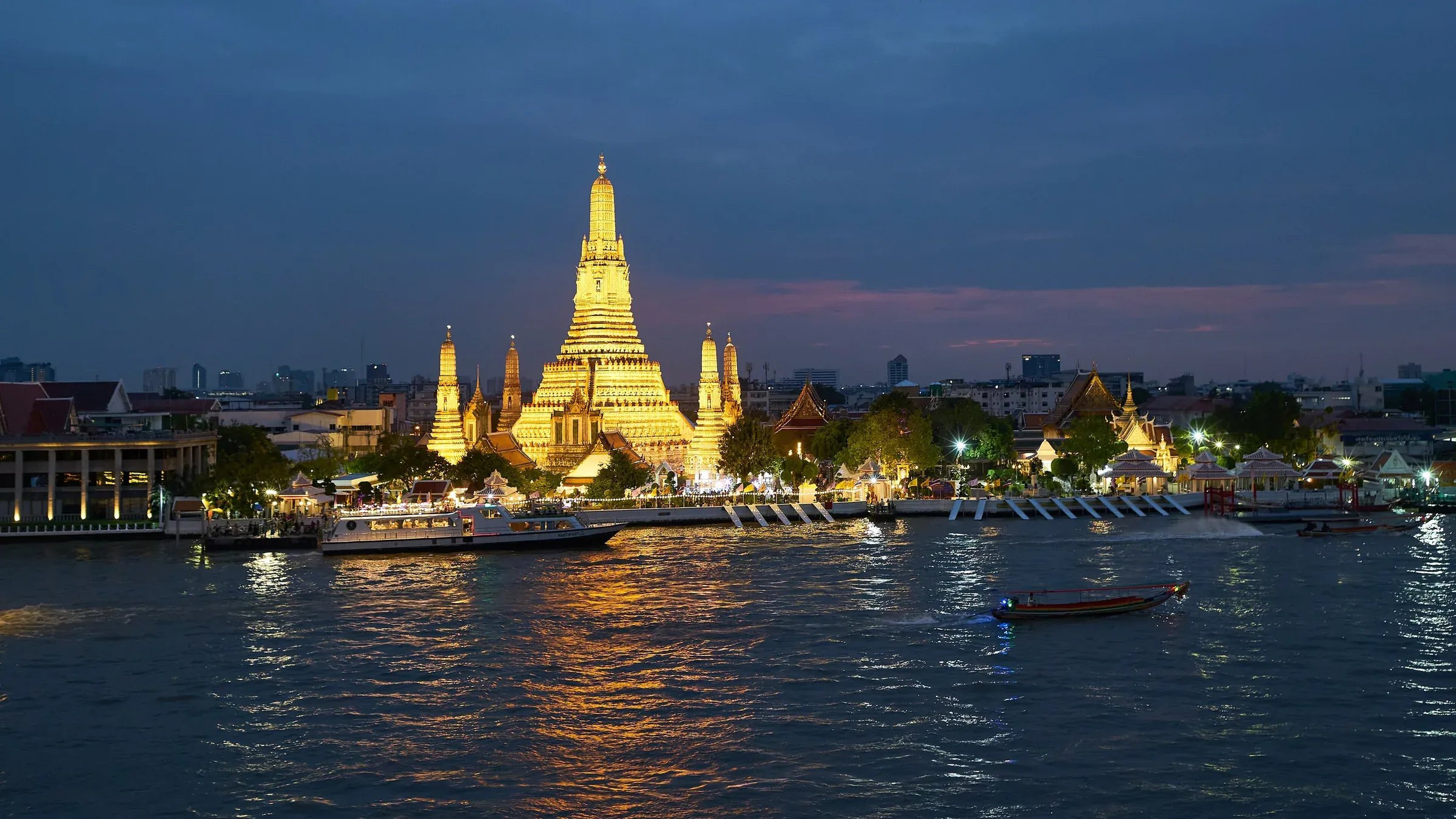
Thai people are famously welcoming, and a few simple customs go a long way in showing respect.
The wai greeting
The wai, palms pressed together with a slight bow, is the traditional greeting. As a visitor you are not expected to initiate it, but returning a wai, especially to older people, is appreciated. A smile works everywhere.
Temples
- Cover shoulders and knees. At the Grand Palace in Bangkok, rules are strictly enforced; sarongs or trousers can sometimes be borrowed or bought nearby.
- Remove shoes before entering temple buildings.
- Do not point your feet at Buddha images or monks; sit with feet tucked to the side.
- Do not climb on Buddha statues or ruins for photos.
Monks
- Women should not touch monks or hand objects directly to them; place items down or hand them to a man to pass on.
- Give monks space on public transport.
The monarchy
The Thai royal family is deeply respected, and Thailand has strict laws against insulting the monarchy. Do not make negative remarks about the royal family, and treat images of the king with respect, including on banknotes. In cinemas, the royal anthem is played before films and people stand.
Head and feet
The head is considered sacred and the feet the lowest part of the body. Avoid touching anyone's head, including children's, and avoid pointing with your feet or resting them on tables.
Keeping cool
Thai culture values calm. Raising your voice or showing anger is seen as losing face. If there is a problem, stay polite and smile.
Practical tips
- Remove shoes when entering homes and some shops.
- Bargaining is normal at markets, but keep it friendly.
- Fill in the Thailand Digital Arrival Card before your trip.
Chiang Mai
In Chiang Mai, choose ethical elephant sanctuaries that do not offer riding. See Responsible travel: simple ways to travel better.
More planning help: Best time to visit Thailand: which coast, which month.



 When to go
 When to go
 When to go
 When to go