
Bali is the only Hindu-majority island in Indonesia, and religion is woven into daily life. Many Indian travellers feel an instant connection, though Balinese Hinduism has its own distinct traditions.
Daily offerings
You will see small palm-leaf baskets (canang sari) with flowers, rice and incense on doorsteps, pavements and shrines. They are offerings to the gods; avoid stepping on them.
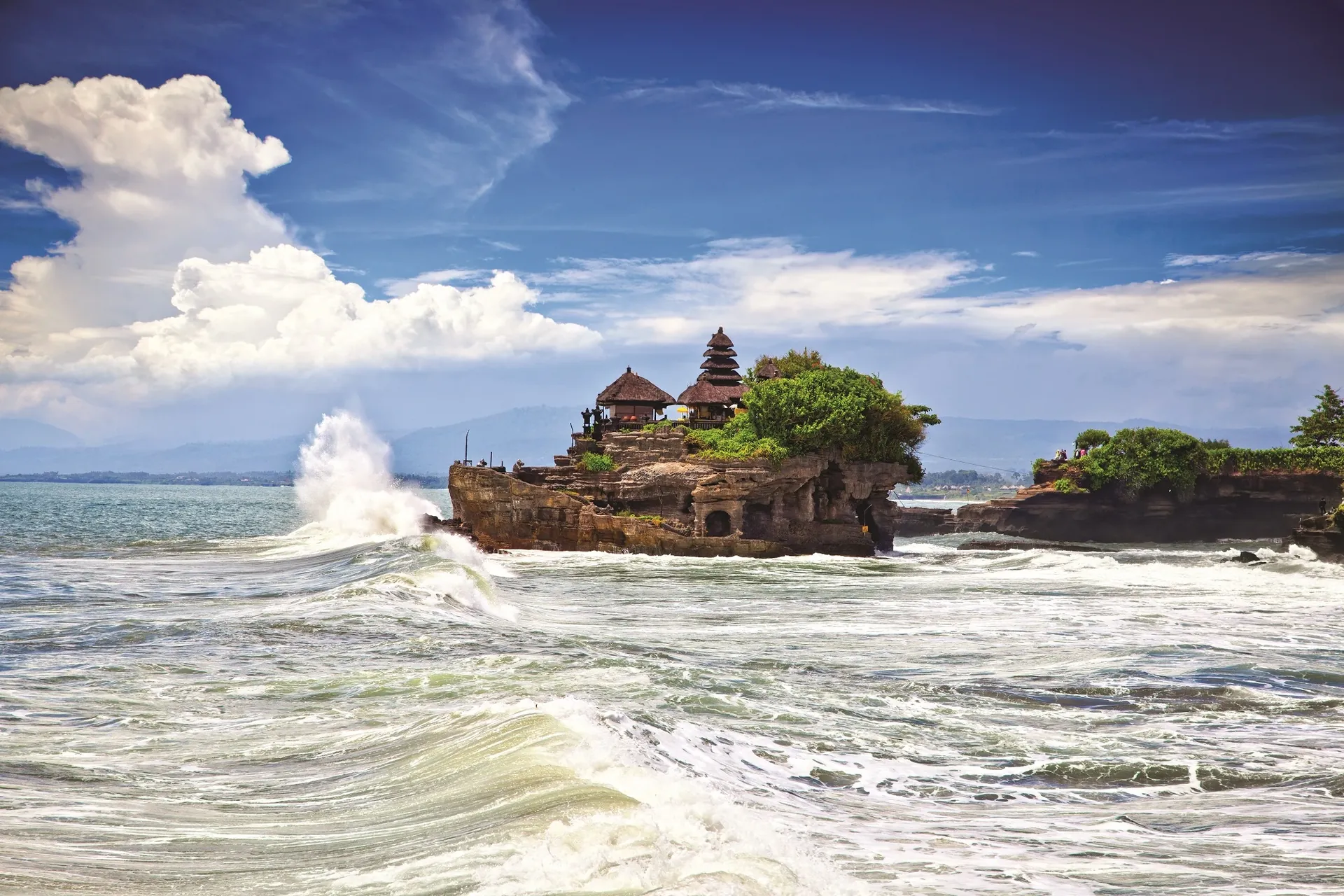
Temple etiquette
- Wear a sarong and sash at temples. Many temples lend or rent them at the entrance.
- Cover shoulders.
- Women who are menstruating are traditionally asked not to enter temples.
- Do not stand higher than priests or offerings, or climb on shrines.
- Some inner courtyards are for worshippers only.
Ceremonies
Processions with music, offerings and people in traditional dress are common, and you may need to wait for one to pass on the road. Watch respectfully, keep your distance and ask before photographing.
Galungan and Kuningan
These important festivals occur every 210 days on the Balinese calendar and celebrate the victory of good over evil. Streets are decorated with tall bamboo poles (penjor). Some businesses close, and family temples are busy.
Nyepi, the day of silence
Nyepi marks the Balinese New Year, usually in March. For 24 hours the entire island goes quiet:
- The airport closes.
- No one may go out on the streets.
- Lights are kept low and noise to a minimum.
- Hotels stay open for guests, but you cannot leave the property.
The night before, villages parade giant ogoh-ogoh effigies representing evil spirits, which are then burned. It is a spectacular evening.
If your trip overlaps with Nyepi, plan to spend that day relaxing at your hotel, and do not plan flights in or out.
Kecak dance
The Kecak fire dance, performed at sunset at Uluwatu and in Ubud, tells the story of the Ramayana.
See Best time to visit Bali: dry season, wet season and festivals and Bali itinerary for 5 to 7 days: where to stay and what to see.

 When to go
 When to go
 When to go
 When to go